MENUMENU

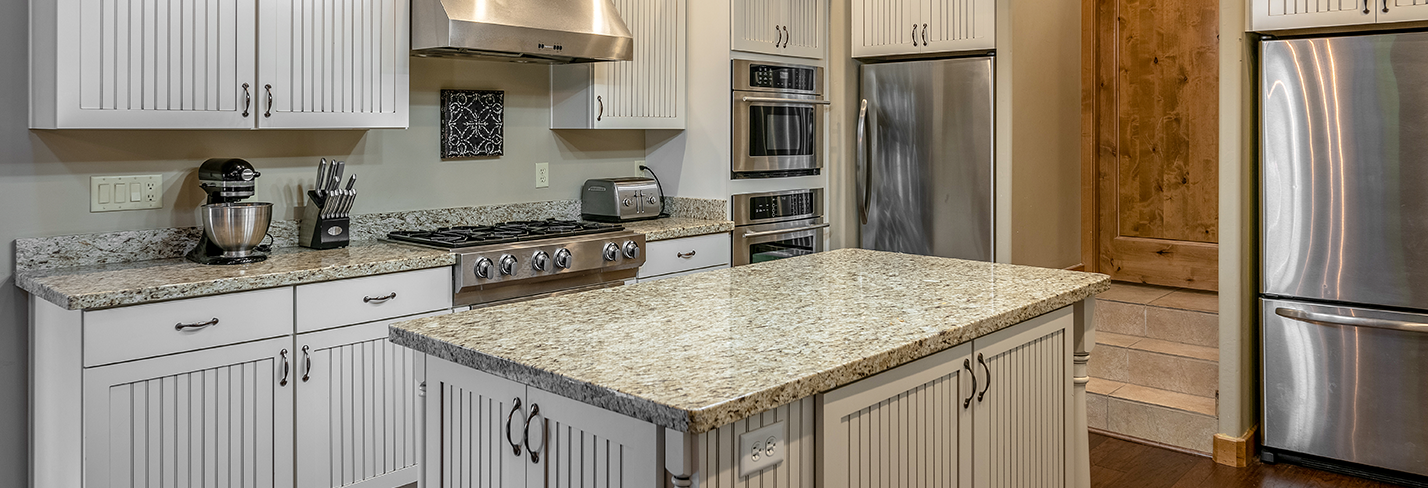
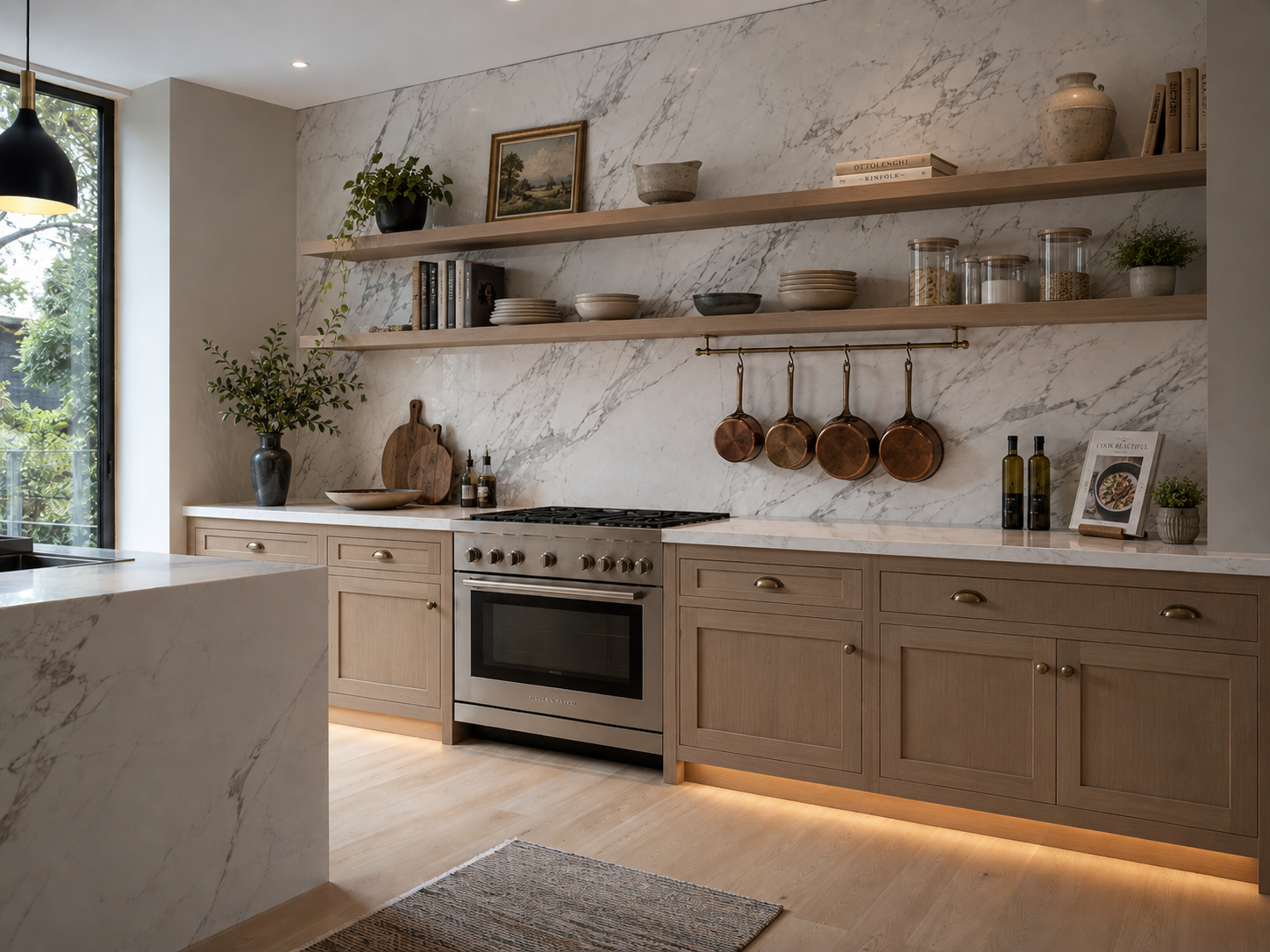
Many homeowners are choosing kitchen designs that feel cleaner, brighter, and more open. One layout that continues to get attention is the kitchen without upper cabinets. Instead of filling the walls above the countertops with traditional wall cabinets, this design leaves more room for tile, lighting, windows, shelving, or a simpler modern look.
For Pittsburgh homeowners remodeling older or smaller kitchens, this style can be appealing. Removing upper cabinets may help a kitchen feel less crowded, especially when the kitchen connects to a dining area, family room, or main living space. It can also create more room for a backsplash, decorative range hood, or carefully selected countertops.
However, a kitchen with no upper cabinets is not right for every home. Removing wall cabinets changes how the kitchen works each day. Before choosing this layout, homeowners need to think through storage, workflow, countertop space, lighting, and long-term usability. If you are researching kitchen countertops in Pittsburgh or comparing kitchen cabinet remodeling options, the goal is to make sure the design looks good and functions well.
A kitchen without upper cabinets removes most or all wall-mounted cabinets above the countertops. Instead of storing dishes, glassware, mugs, spices, and pantry items in wall cabinets, the kitchen relies on other storage areas.
These may include lower cabinets, deep drawers, pantry cabinets, a kitchen island, open shelving, or a full-height cabinet wall. Some kitchens remove all upper cabinets, while others take a more balanced approach, such as keeping cabinets on one wall or adding a few floating shelves.
Each version creates a different look and level of functionality. The right choice depends on the size of the room, the amount of storage needed, and how the homeowner uses the kitchen.
One reason homeowners like kitchens without upper cabinets is the open appearance. Without wall cabinets, the kitchen can feel lighter and less boxed in, which can be helpful in smaller kitchens or layouts where the kitchen is visible from nearby living spaces.
Removing upper cabinets may also improve the flow of natural light through the room. If cabinets crowd a window or make a wall feel heavy, removing them can make the space feel more comfortable. While removing the upper cabinets does not automatically make every kitchen brighter, in the right layout, it can make a noticeable difference.
This design also creates more opportunities for visual details. A wall without upper cabinets gives homeowners more room for a full-height backsplash, textured tile, stone slab, decorative range hood, wall sconces, or floating shelves. For homeowners who prefer modern kitchen cabinets and a clean design, removing some upper cabinets can help simplify the space when the rest of the kitchen is carefully planned.
The biggest concern with a kitchen with no upper cabinets is storage. Upper cabinets often hold everyday items, including plates, bowls, glasses, mugs, spices, pantry goods, small appliances, and cooking supplies. When those cabinets are removed, those items still need a practical place to go.
A no-upper-cabinet kitchen works best when storage is planned before construction begins. Homeowners should not assume that lower cabinets alone will replace everything that was stored above the counters.
For example, deep drawers may work well for dishes and cookware. Pantry cabinets may be needed for dry goods. A kitchen island may need drawers, shelves, trash pull-outs, or appliance storage. Without these details, the kitchen may look open but feel inconvenient.
Express Cabinet and Granite can help homeowners compare custom kitchen cabinets and storage options in Pittsburgh before committing to a custom layout. A professional cabinet plan can help create a kitchen that looks open and works for daily life.
This design can work well for homeowners who already have enough storage or are willing to create it elsewhere. It may be a good fit for people who have a pantry, a large island, or space for tall cabinets. It can also work well for homeowners who prefer a minimalist kitchen and do not keep many dishes, cookware, or small appliances.
A kitchen without upper cabinets may also appeal to homeowners who want a bright, open kitchen with a more modern or custom look. In some Pittsburgh homes, especially older homes, kitchens were not originally designed around open-concept living or large islands. That does not mean this design cannot work, but it does mean layout matters.
Homeowners planning a full kitchen remodel may have more flexibility. Moving storage, adding pantry cabinets, or redesigning an island is easier when the entire kitchen is being planned at once.
A kitchen without upper cabinets may not be ideal for every household. Large families often need more storage for dishes, snacks, cookware, and small appliances. If the kitchen is small and lacks a pantry, removing upper cabinets may cause daily frustration.
This design may also be less practical for homeowners who dislike visible clutter. Open walls and open shelves can look clean when everything is organized, but they can also make clutter more noticeable. Homeowners who want a more traditional kitchen may prefer standard wall cabinets, glass-front cabinets, or a partial upper cabinet layout.
Resale is another consideration. Some buyers may like the open, modern look, while others may worry about storage. A kitchen without upper cabinets is more likely to appeal to future buyers when it still offers strong storage and a practical layout.
The success of this design depends on storage. Deep-drawer cabinets are one of the most useful options. They can store pots, pans, dishes, food containers, and pantry items in an easy-to-access way. Pull-out shelves can also make lower cabinets more functional by reducing wasted space and making items easier to reach.
Tall pantry cabinets can replace much of the storage normally handled by upper cabinets. These cabinets can hold food, small appliances, serving pieces, and household supplies.
Kitchen island storage is another important option. A well-designed island can include drawers, shelves, cabinets, trash pull-outs, and space for appliances. Some homeowners also choose a full-height cabinet wall, which keeps the main kitchen walls open while concentrating storage in one area.
Built-in organizers can also help. Drawer dividers, spice pull-outs, tray dividers, corner cabinet solutions, and appliance garages can make the kitchen more efficient and easier to use every day.
Many homeowners who like the idea of removing upper cabinets also consider open shelving. Open shelves can provide light storage, display dishes or decor, keep everyday items within reach, and create a casual modern look.
However, open shelving has limitations. It can collect dust, look cluttered, and require regular styling. It also does not protect dishes and glassware as effectively as closed cabinets. For busy households, replacing every upper cabinet with open shelving may not be practical.
A balanced approach often works better. A few floating shelves can add function and interest without taking over the room. Homeowners should think carefully about what they will store on the shelves and whether they want those items visible every day.
When upper cabinets are removed, the eye naturally focuses more on the countertops, island, backsplash, and lower cabinets. For homeowners researching kitchen countertops in Pittsburgh, the countertop should support both the design and the way the kitchen will be used.
A bold granite countertop can become a focal point. A more subtle granite or quartz surface can help the kitchen feel clean and timeless. A large island may become the visual center of the room, so its surface needs to coordinate with the rest of the design.
Countertops also need to be practical. Food prep, cooking, cleaning, entertaining, and daily family routines all happen on these surfaces. Appearance matters, but durability and maintenance should also be part of the decision.
Express Cabinet and Granite can help homeowners explore granite countertops and other countertop design options that fit the kitchen layout, cabinet style, and overall remodel plan.
The backsplash also becomes more important when there is more visible wall space. Homeowners may choose a full-height tile backsplash, a stone slab backsplash, textured tile, a simple neutral backsplash, or a feature behind the range. The best choice depends on the countertop, cabinet color, flooring, lighting, and overall style of the room.
Upper cabinets often provide a place for under-cabinet lighting. When those cabinets are removed, the lighting plan needs to change. A kitchen without upper cabinets may need recessed ceiling lights, pendant lights over an island, wall sconces, range hood lighting, or additional task lighting over prep areas.
Layout is just as important. Before removing upper cabinets, homeowners should think through their daily routines. Where will dishes be stored? Is that storage close to the dishwasher? Are cooking tools near the stove? Is there enough prep space? Does the island improve traffic flow or interrupt it? Is the pantry easy to access?
These questions are especially important in Pittsburgh homes where existing kitchen layouts may be narrow, closed off, or shaped by older floor plans. A design trend should support the homeowner’s lifestyle, not make everyday tasks harder.
Removing upper cabinets does not always make a kitchen remodel cheaper. While homeowners may save money by using fewer wall cabinets, other parts of the project may cost more. The kitchen may need larger base cabinets, deep drawer storage, pantry cabinets, a larger island, finished wall treatments, a full-height backsplash, premium countertops, or additional lighting.
Resale value also depends on more than whether a kitchen has upper cabinets. Some buyers may appreciate the open design, especially if the kitchen has good storage elsewhere. Others may prefer traditional wall cabinets. A kitchen without upper cabinets is more likely to be viewed positively when it feels intentional and functions well.
If storage appears to have been sacrificed only for style, the design may be less appealing. If the layout includes pantry cabinets, island storage, deep drawers, and durable countertops, the open look can feel more practical.
Homeowners do not have to remove every upper cabinet to get a more open kitchen. You can remove upper cabinets on only one wall, especially near a window or range. You can keep upper cabinets near the refrigerator or pantry area while leaving another wall open. Glass-front upper cabinets can create a lighter appearance while still providing closed storage.
Floating shelves can add display space without making the room feel heavy. A full-height cabinet wall can provide storage while keeping the main work area open. A large island can also help replace some of the storage lost from wall cabinets.
Kitchens without upper cabinets can be bright, open, and modern, but they require careful planning. The best results come from balancing open design with practical storage, durable countertops, good lighting, and a layout that fits the homeowner’s daily routine.
For Pittsburgh homeowners, the decision should be based on how the kitchen will actually be used. A no-upper-cabinet kitchen may work well if there is enough storage in the island, pantry, lower cabinets, or a full-height cabinet wall. It may not be the best choice if the household depends heavily on wall cabinet storage.
Thinking about remodeling your kitchen? Express Cabinet and Granite can help you choose the right kitchen cabinets, countertops, and storage solutions for your Pittsburgh home. Contact our team today to start planning an open, functional kitchen.
